Solar Powered Air Conditioners: Stay Cool & Save in 2027
The UK is Getting Hotter, Plan Ahead for Summer 2027 with a Solar Air Conditioner
We all know the UK is getting hotter and energy bills are getting higher- could solar powered air conditioners be the solution?
Summer 2026 saw record UK temperatures drive demand for domestic air conditioning. However whilst air con kept homes cool the increase in electricity bills turned up the heat on homeowners financially.
With the trend in uncomfortable and at times dangerous Summer temperatures set to continue; we’ll explore what this means for UK households and how can you prepare to keep temperatures and energy bills as low as possible next Summer!
What is a Solar Powered Air Conditioner?
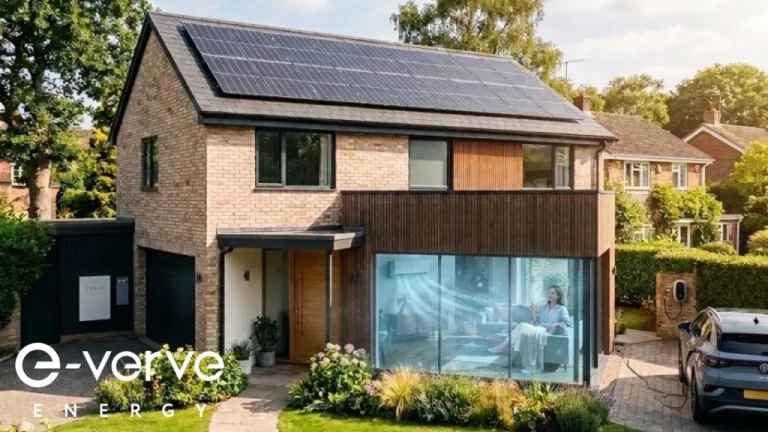
A solar powered air conditioner doesn’t refer to a specialist product—it refers to a smart system integration.
Instead of drawing electricity from the grid – a solar powered air conditioner runs primarily on solar generated electricity. Drawing only from the grid when solar generation and battery stored electricity are depleted. Significantly reducing running costs and lowering the home’s carbon footprint.
Below we’ll break down why temperatures are rising. The real costs of keeping cool, and why a solar powered air conditioner is one of the most sought after and cost effective home upgrades to plan for in 2027!
Are UK temperatures catching European Averages?
In 2022 the Met Office recorded temperatures in England exceeding 40 degrees. A record for the UK- seen in Lincolnshire- which set precedence for year on year increases.
Across Europe the trend is reflected. Since the pre-industrial era temperatures have risen approximately 2 degrees according to the European Environment Agency. With projections suggesting a further 1–3°C increase by 2050 depending on emissions trajectories.
Despite the UK’s northernly latitude it is not protected from these temperature shifts. Southernly cities such as London and Bristol now regularly experience prolonged heat waves above 30 degrees. Temperatures previously considered reserved to Mediterranean climates.
Compounded by a built environment designed for cold and damp. These higher temperatures create real problems when faced with heavily insulated homes, small windows and no mechanical cooling.
When comparing UK households to those across Italy, France and Spain that have long adapted to summer heat. The UK needs to catch up, and fast.
Air Conditioning Adoption UK vs Europe
There’s a stark difference in the adoption of home air conditioning when comparing the UK to the rest of Europe.
Recent estimates from the European Parliament suggest approximately 19% of homes across the continent have air conditioning. However the figure is heavily weighted towards southern European homes with Spain and Italy exceeding 60-70%. For the UK air con adoption sits around 5%, with most cooling achieved via portable units.
The current disparity is a reflection of decades of climate difference. But with the reality of new British Summers, shows how underprepared the housing stock in the UK actually is. With rising temperatures rapidly closing the gap.
This is reflected in the UK air conditioning market which has seen sharp increases in recent years. Industry analysts have noted significant year on year growth in the uptake of home air conditioning. Following in line with each successive heatwave.
So the shift is clearly happening. But how will UK households manage the increase in utility bills associated with the running costs?
The Direct Link Driving Demand
Rising temperatures and the uptake of air conditioning don’t just correlate- they compound!
Each degree of average summer warming doesn’t add a proportional number of uncomfortable days. It adds many more, because it lifts the entire temperature distribution upward.
For example, a summer that previously recorded 3 days above 28 degrees may now record 10 to 15 days.
In response households reach for a fan, then as temperatures remain persistently high perhaps a portable unit. Eventually considering a full home air conditioning installation.
This trend is currently rolling out across the UK and its not just for comfort but for health reasons also. Heat exposure is linked to thousands of UK deaths per year particularly among elderly and vulnerable categories. With increasing Heat- Health Alerts issued by the Health Alerts from the UK Health Security Agency (UKHSA). Adequate indoor cooling is moving from perceived luxury to health necessity and this reframing matters.
When air conditioning becomes essential rather than optional, the conversation shifts to: how do we make it affordable?
How Much Does Air Conditioning Cost to Run Per Year in the UK?
Of course, running costs will vary depending on household usage patterns, home size and the type of system installed. But with any combination of the above the costs are significant.
Typically a 3.5 kW single zone AC unit consumes roughly 1.5 kW of electricity per hour. So for example to run for 6 hours per day usage across a four month period (May to August). Consumption would be around 1000 kWh of electricity annually.
Taking the current UK price cap rate of around 26p per kWh this equates to around £260 per year for one unit. Remembering this is to cool one room only. For homes that install multi room systems, and those using AC for longer hours during extreme heat- the annual running costs can easily reach 4 figures.
With energy bills already high many UK homeowners are hesitant to install air conditioning despite the looming rising Summer temperatures.
However solar changes this calculation entirely!
The Solar Air Conditioner Solution
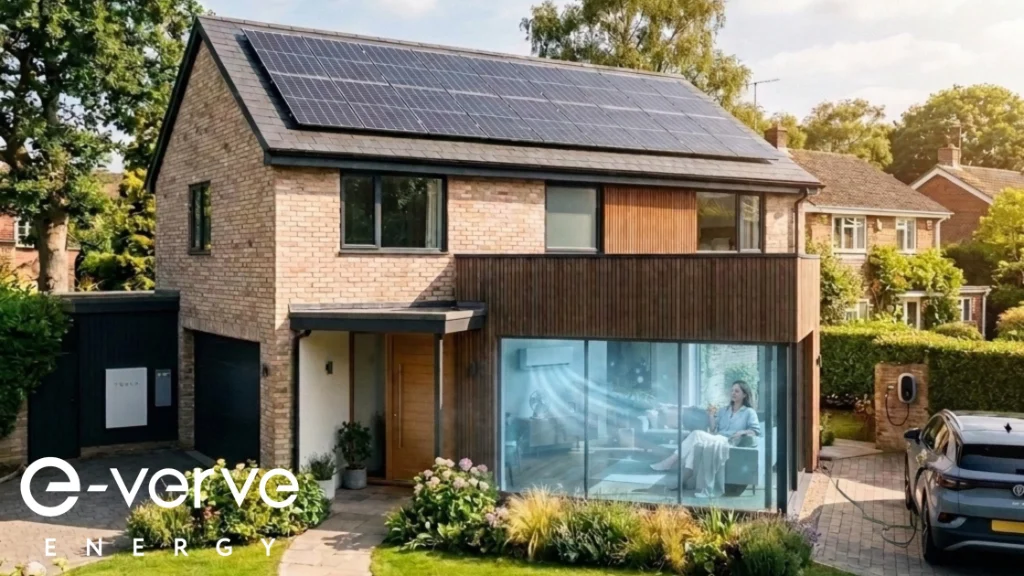
By installing rooftop solar panels and a battery storage unit, homeowners can power their air conditioning almost entirely from free, self-generated electricity rather than drawing from the grid.
This is the core value proposition of the solar air conditioner approach: rather than choosing between comfort and cost, you generate your own cooling power.
Here’s how a solar powered air conditioner system works in practice:
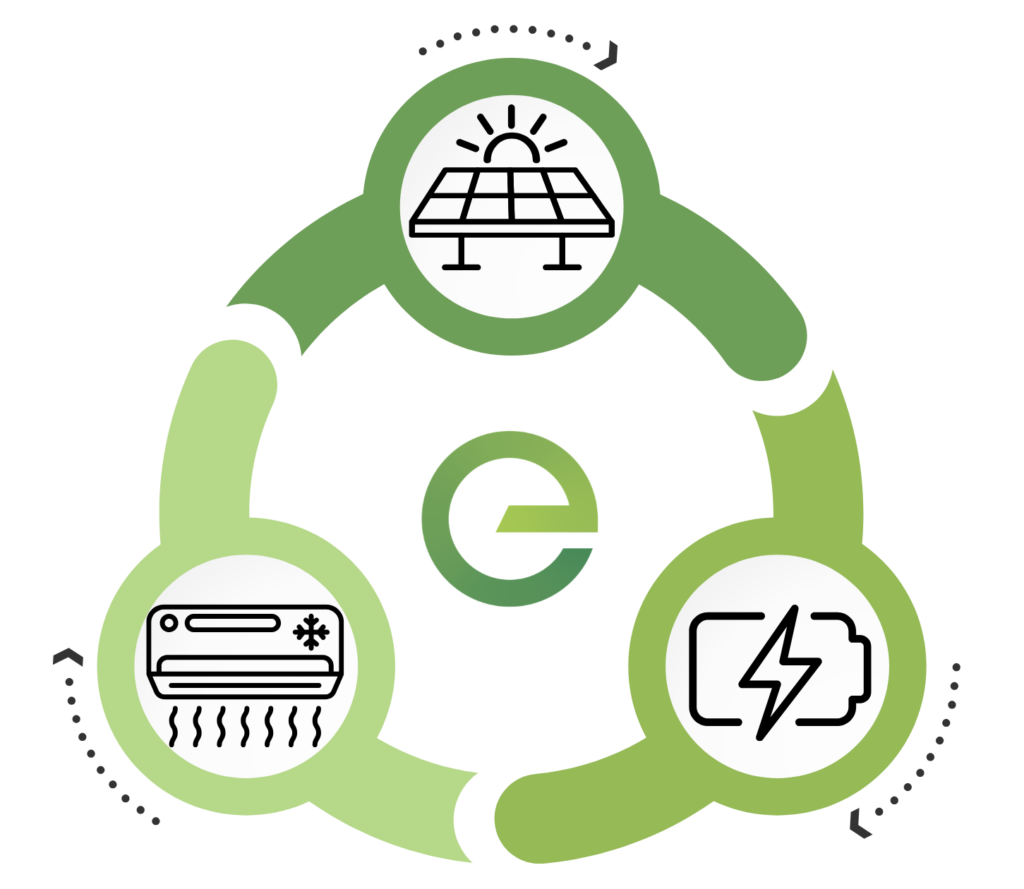
- Solar panels generate electricity during the day. Peak generation is usually achieved between 10am and 4pm. The energy generated will closely align with demand for cooling on hot days.
- Battery storage captures any surplus energy not used immediately during the day. This provides energy for evening use when the sun has set but temperatures remain high.
- Air conditioning unit will use electricity generated by the solar panels first then will draw from the battery when needed. It will only use grid electricity when both are depleted.
The result is a home cooling system that is largely self-powered, with grid electricity used only as a backup during extended cloudy periods or unusually high-demand days.
Is a Solar Air Conditioner Worth the Investment?
The case for solar powered air conditioner systems is a compelling one- especially given the continual rise in UK energy bills and climate trends.
Whilst there is an obvious upfront cost, it needs to be weighed against long term savings. Not only in regards to electricity and air conditioning. But other potential avenues such as EV charging and heat pump compatibility which could lower overall household costs significantly.
The average cost of a solar panel and battery storage system will vary depending on specification, installation complexity and brand choice. If you were looking at a good quality 12 panel 480W system with an overall solar panel capacity of 5.76kW paired with a 10kW home battery storage system you could look to pay anywhere from £8,500 up to approximately £10,000.
The AC unit itself typically costs £1,500–£3,500 installed, depending on system type and number of zones.
For households looking to install solar and battery storage systems solely to create a solar air conditioner system the offset calculation below demonstrates the financials.
How Much Can a 12 Panel, 10kW Battery System Offset Annually?
Following the example system above a standard 12 panel, 10kW battery solar set up with 480W panels panels produces around 4,500 kWh of electricity on average per year in the UK. This generation various on factors such as geographical location, roof orientation and panel shading. With homes in southern England benefiting from south- facing rooftops achieving the higher end of that range.
Pairing the solar PV with battery storage will allow for surplus daytime generation to be stored for use when the sun goes down. Perfect for the hot summer nights. The pairing of solar battery storage and air conditioning is specifically advantageous given that the high generation days are also the days when air conditioning is needed most. Creating the perfect symbiotic relationship.
A single zone solar powered air conditioner set up would use around 25% of this generated electricity. Which is typically required on warmer days when peak Solar PV generation levels are high enough to power the home and also service the battery storage system for evening use. A 12 panel 480W solar PV system with an overall capacity of 5.76kW will provide enough generated electricity on warm clear days to service the average property Summer baseload of 8kW – 12kW per day. With surplus solar remaining to power air conditioning units, rather than being exported to grid at a lower daytime payback rate.
Approximate Savings
Continuing with the above example of a 12 panel 5.76kW solar system with 10kW battery storage, approximate annual savings which could be achieved with a solar powered air conditioner system are as follows:
- Households using intelligent energy management e.g, running the AC during peak solar hours and drawing from battery in the evening. Can look to cover anywhere between 70–90% of their annual AC electricity demand without touching the grid.
- A single zone air conditioning unit, requiring around 1000 kWh per peak usage season would translate to around 25% of your total annual solar generation. Based on the system example above.
- Basing savings on a single zone unit at a standard cost of 26p/kWh. That translates to savings of approximately £260 per year on AC running costs alone—per unit. With multi zone systems achieving savings of £350 upwards.
By coupling solar panels with air conditioning, running costs can be offset by between 70% to 90% dependent upon the system capacity and total units present. Using lower rate tariffs coupled with home battery storage systems can also mitigate costs allowing the battery storage system to support the air conditioning units throughout the day. A battery storage system which is near 100% capacity during mid morning will also ensure maximum levels of surplus solar are available to power the air conditioning units.
Key Takeaways
- Rising UK temperatures are making residential air conditioning an increasingly practical necessity, not a luxury.
- The UK has one of the lowest air con adoption rates in Europe. However more frequent and severe heatwaves is driving the uptake rapidly.
- The average running costs of an air con unit in the UK is typically between £250- £750 per year. Depending on usage.
- A solar powered air conditioner setup—combining rooftop PV panels with battery storage—can offset 70–90% of air con electricity demand using self-generated energy.
- An 12-panel Solar PV system coupled with 10kW battery storage generates around 4500kWh electricity per year with upto 70% of this being used to power the home. Based on an average unit price of 0.26p per kWh the average household will make minimum annual savings of £981 per year upto a maximum of £1281 with a SEG export rate of 0.12p per kWh applied
- The combination of rising energy costs and hotter summers. Means solar powered air conditioning is one of the most financially sound home upgrades available to UK homeowners today.
How E-Verve Can Help You Plan Ahead for Summer 2027
Team E-Verve specialises in designing and installing integrated solar and battery storage systems. Including setups optimised to support air conditioning. We put expertise, honesty, and genuine care first so you get trusted solutions tailored to your needs. Keeping temperatures and energy bills as low as possible.
Our team will assess your roof, energy usage, and cooling requirements to recommend the right panel configuration and battery capacity for your property.
Whether you’re planning a new solar powered air conditioner set up or looking to offset the cost of an existing unit, we can help you make the most of the UK’s increasing sunshine—and turn a rising temperature problem into a long-term energy saving opportunity.
Here’s how we can support you
- Clear, honest quotes that show your pricing up front so you know exactly where you stand, with transparent pricing and clear communication throughout.
- Expert system design that includes setups to support air conditioning where required. We put expertise, honesty, and genuine care first so our customers get trusted solutions tailored to their needs with real meaningful savings.
- Compliance you can trust Our wealth of industry accreditations includes MCS, Napit and RECC which are underpinned by over 10 years industry experience and numerous consumer protection endorsements. We were also named Most Trusted Renewable Energy Installers in the North West, so you’re in safe hands!
- Support with timing Summer 2027 may seem a long way off. But if your planning on having your solar air con set up installed in time for rising temperatures- your planning needs to start now. With industry demand at an all time high, product availability can often come with long lead times. Design and planning at the earliest opportunity is key. This also allows sufficient time for installation slots to be booked with your preferred installers as bookings for the new year are already being made.
Get in touch with team E-Verve for a free, no-obligation consultation and start planning for Summer 2027 today.