EASY EV Charging
We’ve used our expert knowledge to select the best EV home charge point options for you! We offer hassle free home EV charging with an instant online tailored quote via our EASY EV process which includes:
- Installed in 7 days
- Best Home EV charge point models

- Multi-award Winning
- 20,000+ Installations
- 10+ Years’ Experience
- Fully Accredited Installations

Hassle-free Solar PV!
We ensure a smooth transition to renewable energy and believe in transparent pricing, and clear communication so you’re never left in the dark!
Named Most Trusted Renewable Energy Installer 2024 and with over a decade of experience as solar panel installers- you’re in safe hands! We’ve selected the best products on the market to offer our customers fixed price Solar Solutions with:
- 0% VAT
- Industry Leading Warranties
- 2 Year Installation Guarantee
Our fixed price Solar Panels can save you up to 80% on your energy bills when installed with battery storage.


Take the next step to renewable energy
We ensure a smooth transition to renewable energy with transparent pricing and clear communication. So you’re never left in the dark!
Have more questions?
That’s okay, we’ve answered some of the more commonly asked questions here. But please get in touch if you’d like to find out more.
In the majority of instances, solar panel installation is covered by the General Permitted Development Order. Therefore does not require planning permission.
Understanding Permitted Development Rights
In England, Scotland, Wales, and Northern Ireland, governments have established rules that allow homeowners to make certain improvements without a full planning application. This is known as Permitted Development (PD). Solar panels often fall under these rights, but you must meet a set of specific criteria.
If your installation falls outside these limits, you will need to submit a planning application to your local council. It’s always a good idea to check with your local planning authority before starting any work, especially if you live in a sensitive area or your building is listed learn more.
Solar Panels on a Standard Pitched Roof
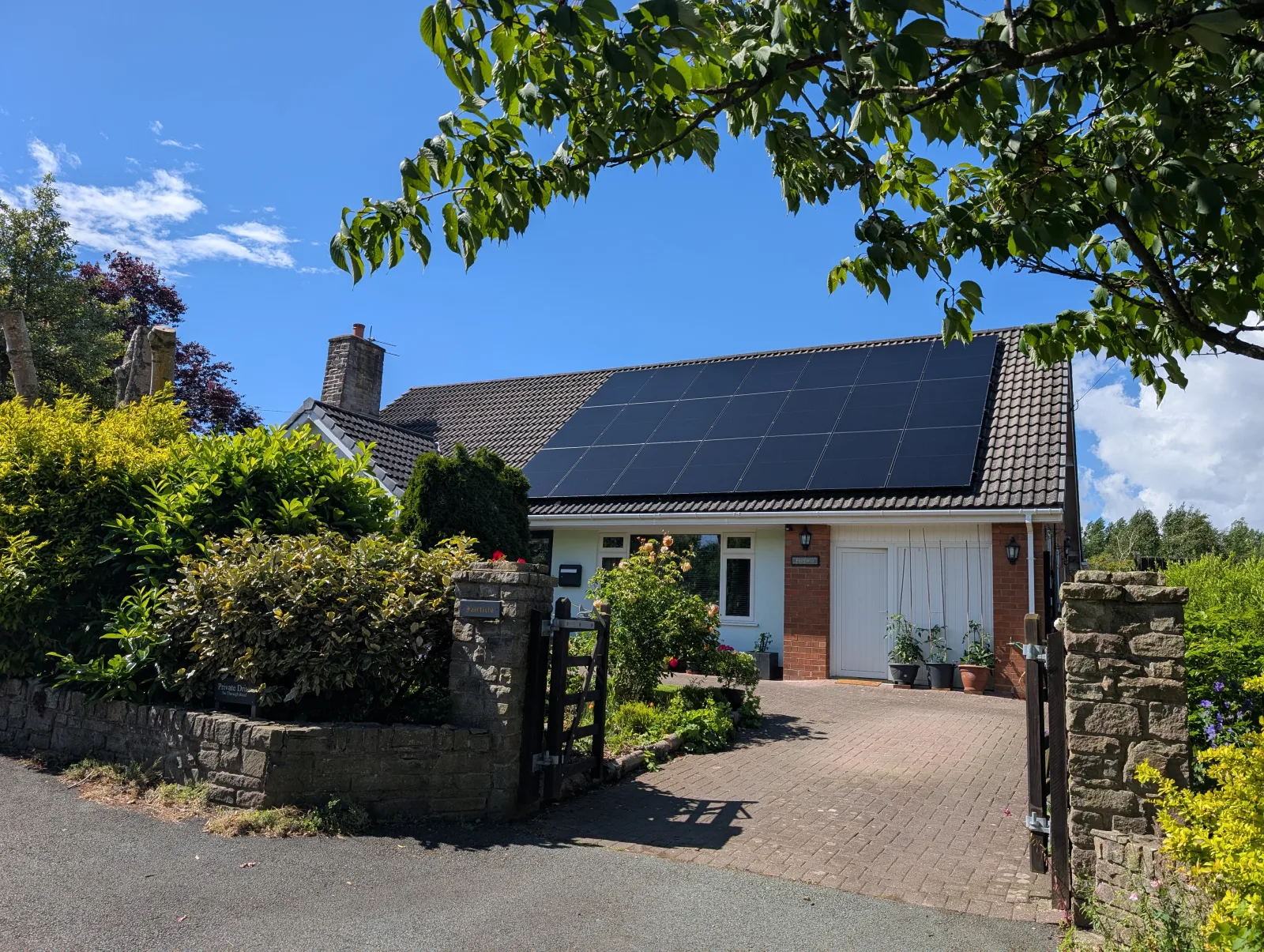
This is the most common type of domestic installation. In most cases, you will not need planning permission for panels on your roof if you meet the following conditions.
Key Requirements:
- Panels must not project more than 200mm (about 8 inches) from the plane of the roof slope or wall surface.
- The installation should not be higher than the highest part of your existing roof (excluding the chimney).
- Panels must be installed in a way that minimises their effect on the building’s external appearance and the area’s amenity.
- If you remove the panels, the wall or roof must be returned to its previous condition as far as is practical.
These rules are designed to ensure solar installations are discreet and don’t significantly alter the look of a neighborhood. Most modern solar panel systems are designed to fit well within these guidelines.
Solar Panels on a Flat Roof
Installing solar panels on a flat roof is also generally considered a permitted development, but the rules are slightly different to account for the mounting systems required.
Key Requirements:
- The panels must not be installed within 1 meter of the external edge of the roof.
- They must not project more than 1 meter above the highest part of the flat roof (excluding any chimneys).
- As with pitched roofs, they must be installed to minimize visual impact.
The mounting frames for flat roofs often tilt the panels to an optimal angle for sunlight exposure. The height and distance rules ensure these frames remain largely out of sight from street level. For more information on flat roof solar installations, check out our guide: Flat Roof Solar Panels UK: The Ultimate Guide for Homeowners
Ground-Mounted Solar Panels
If you have space in your garden, a ground-mounted system can be an excellent option. However, the rules for these installations are more restrictive.
Key Requirements:
- You are only allowed one ground-mounted solar array per property.
- The array must not be taller than 4 meters.
- It must be located at least 5 meters from the boundary of your property.
- The total surface area of the panels must not exceed 9 square meters.
- The installation must not be located in your front garden or any area between your house and a public road.
If your proposed ground-mounted system exceeds these limits, for example, if you want a larger array to generate more power, you will need to apply for full planning permission. For more detailed information on ground mounted solar panels check out our guide: Ground Mounted Solar Panels: The Complete Guide and Benefits
Wall-Mounted Solar Panels
While less common, mounting solar panels on a wall is another possibility. These are also covered by permitted development rights, provided you follow the rules.
Key Requirements:
- Panels must not project more than 200mm from the wall surface.
- The installation must not be higher than the highest part of the building’s roof (excluding the chimney).
- They cannot be installed on a wall that faces a public highway if you live in a conservation area or a World Heritage Site.
For more detailed information on wall mounted solar panels check out our guide: Wall Mounted Solar Panels Are They Right For You?
Special Considerations: Listed Buildings and Conservation Areas
The rules for permitted development are much stricter if you live in a designated area. These include:
- Conservation Areas
- World Heritage Sites
- National Parks
- Areas of Outstanding Natural Beauty (AONBs)
- The Broads
If your property is a listed building, you will almost certainly need to apply for Listed Building Consent before installing solar panels anywhere on the property, including the roof or in the garden. This is because the primary concern is preserving the historical character and fabric of the building.
For properties in conservation areas and other designated zones, permitted development rights are limited. For example, you cannot install panels on a roof or wall that fronts a highway. It is essential to contact your local council’s planning department to discuss your plans before proceeding. They can provide specific advice for your situation.
Conclusion: Plan Ahead for a Smooth Installation
For the majority of UK homeowners, installing solar panels is a straightforward process that doesn’t require planning permission. By following the permitted development guidelines for your chosen installation type you can avoid delays and unexpected costs.
However, it’s crucial to be aware of the specific limitations:
- Pitched Roofs: Must be low-profile (under 200mm projection).
- Flat Roofs: Must be set back from the edge and not project too high.
- Ground-Mounted: Limited in size and must be in a rear garden.
- Special Areas: If you live in a listed building, conservation area, or another protected zone, always check with your local planning authority first.
Taking the time to understand these rules is the first step toward a successful solar energy project. For more detailed information check out our guide: Do You Need Planning Permission for Solar Panels in the UK?
We offer a range of home batteries to ensure you have plenty of capacity to collect any excess solar generated to use at a later time as required (e.g. during the night). Our batteries have a varying storage capacity from 5kWh to 13kWh to ensure the right solution for your energy generation. Another added bonus of installing a battery at the same time as your new solar panels is your battery qualifies for the same VAT rate as Solar PV (instead of 20%.) So getting them together presents additional smart savings!
Most Trusted Solar Panel Installers 2024!
If you’re looking for solar panel installers that consider your whole energy usage and want to save you money, then get in contact with us today. Team E-Verve’s expert solar panel installers will guide you through the Solar PV process and provide a no obligation home quote.
Learn more about battery storage and the additional savings you could achieve here.
Many people think solar panels are only for slanted, traditional roofs. However, flat roofs are often an excellent, and sometimes even better, platform for a solar energy system. You can absolutely install solar panels on a flat roof, and doing so offers unique advantages for capturing the sun’s power.
How Do Flat Roof Solar Panels Work?
Unlike panels on a pitched roof that follow the roof’s existing angle, installations on a flat roof use a mounting system. This system consists of a frame that tilts the solar panels to an optimal angle. This setup allows you to control the direction and tilt of your panels, maximising their exposure to sunlight throughout the day and year.
The ability to customise the angle is a major benefit. Installers can position the panels to face directly south (in the Northern Hemisphere) and tilt them to the perfect degree to catch the most rays. This customisation often leads to higher energy production compared to a roof that doesn’t face the ideal direction. These mounting systems are specifically engineered to be secure, efficient, and safe for your roof structure.
Finding the Best Tilt and Angle
To get the most out of your solar panels, their tilt and angle are crucial. The goal is to position them so the sun’s rays hit the surface perpendicularly for as long as possible.
Optimal Angle (Azimuth)
In the UK and the rest of the Northern Hemisphere, the ideal direction for solar panels to face is south. This position captures the maximum amount of sunlight as the sun travels across the sky. However, east or west-facing panels can also be effective. An east-west configuration, where some panels face east and others west, can provide a more consistent energy supply throughout the day—capturing morning sun and afternoon sun respectively.
Optimal Tilt (Pitch)
The best tilt for your panels depends on your location’s latitude. A common rule of thumb is to set the tilt angle equal to your latitude. For most of the UK, which sits between 50 and 60 degrees latitude, the optimal tilt is generally between 30 and 40 degrees.
- Summer: A lower tilt angle (around 15-25 degrees) is better for capturing the high summer sun.
- Winter: A steeper tilt angle (up to 60 degrees) helps catch the low winter sun and also allows snow to slide off more easily.
Most installers recommend a fixed, year-round tilt of 30-40 degrees. This provides an excellent balance for consistent energy generation throughout all seasons without needing seasonal adjustments.
Is Your Flat Roof Suitable for Solar Panels?
Before you move forward, you must confirm that your roof can support a solar panel system. A professional surveyor will assess your roof for several key factors.
Roof Condition and Material
First, an expert will check the overall health of your roof. The roofing material—whether it’s EPDM rubber, PVC, felt, or asphalt—must be in good condition. There should be no leaks, significant wear, or damage. Since a solar panel system has a lifespan of 25 years or more, it’s often wise to replace an older roof covering before installation to avoid having to remove the panels for roof repairs later.
Maximum Weight Restrictions
A solar panel system adds weight to your roof. This is known as the “dead load” and includes the panels, mounting frames, and ballast blocks. A structural engineer or qualified surveyor must calculate your roof’s load-bearing capacity to ensure it can handle the additional weight safely.
A typical solar panel weighs around 20-25 kg. The complete system, including the mounting and ballast, can add between 15-30 kg per square meter. Most modern flat roofs are built to withstand this, but a professional assessment is essential to confirm it. If the roof cannot support the weight, reinforcement may be necessary, or a lightweight mounting solution might be an alternative.
Installation Methods for Flat Roofs
Installers use specific methods to mount solar panels on flat roofs. The primary goal is to secure the system without compromising the roof’s waterproof integrity. There are two main approaches: ballasted and penetrated systems.
Ballasted Mounting Systems
This is the most common and preferred method. A ballasted system does not require drilling any holes into your roof. Instead, the mounting frame is held down by heavy weights, typically concrete blocks or specially designed trays filled with gravel.
The system is designed with wind deflectors and an aerodynamic layout that uses wind forces to help hold the array in place. The main advantage is that it preserves the waterproof membrane of your roof, eliminating the risk of leaks from installation. This method is ideal for most flat roofs, provided the structure can handle the weight of the ballast.
Penetrated (Mechanically Fixed) Systems
In some cases, a ballasted system isn’t suitable. This might be because the roof cannot support the extra weight of the ballast, or the building is in a high-wind area that requires a stronger connection.
In these situations, installers use a penetrated or mechanically fixed system. This involves physically attaching the mounting frame to the roof’s structural joists or deck with bolts. To prevent leaks, installers use specialised flashing and sealants around each penetration point. While very secure, this method carries a higher risk of water ingress if not performed perfectly. It should only be done by experienced and certified professionals.
Conclusion: A Smart Choice for Solar Energy
Installing solar panels on a flat roof is not only possible but also a highly effective way to generate clean energy. The ability to customise the tilt and direction allows you to optimise your system for maximum power output, potentially exceeding the performance of installations on less-than-ideal pitched roofs. For more detailed information check out our blog: Flat Roof Solar Panels UK: The Ultimate Guide for Homeowners
The short answer is yes, you definitely can. While they’re designed to pair perfectly with solar energy, modern battery systems are flexible enough to provide plenty of benefits on their own.
How Do Solar Batteries Work Without Solar Panels?
Batteries installed without solar panels don’t produce their own power; instead, they pull electricity straight from the utility grid. You might wonder why someone would do this—the idea is to use the battery to capitalise on changing electricity prices.
The technology required is an AC-coupled battery system. AC- coupled batteries have a built in inverter, allowing connection to your home’s main electrical panel without a separate solar inverter. The setup is relatively straightforward for a qualified electrician.
The battery’s smart software keeps an eye on the grid and charges up during off-peak hours when electricity costs less. Then, during peak times when rates go up, your home can pull power from the battery instead of the grid. This approach, called energy arbitrage or time-of-use shifting, can help you save a lot on your utility bills.
Pros and Cons of a Standalone Battery System
Installing a battery without solar panels comes with its own set of benefits and drawbacks.
Advantages
- Cost Savings on Utility Bills: By charging with cheap, off-peak electricity and using it during expensive peak times, you can lower your overall energy costs. This is especially beneficial for those on a time-of-use (TOU) tariff.
- Backup Power During Outages: A standalone battery provides an uninterrupted power supply (UPS) during blackouts. It can keep your essential appliances like refrigerators, lights, and medical devices running, offering peace of mind and security.
- Grid Stability: Using batteries in this way can help reduce strain on the electrical grid during peak demand periods. Some utility companies even offer incentives for customers who participate in demand response programs.
- Future-Proofing Your Home: Installing a battery now makes it much easier to add solar panels later. The core infrastructure is already in place, simplifying a future transition to a full solar-plus-storage system.
Disadvantages
- Higher Upfront Cost: Solar batteries are a significant investment. Without the energy generation from solar panels to offset the cost, the return on investment (ROI) may be longer.
- Reliance on the Grid: Your battery is charged with grid electricity. This means your energy isn’t coming from a renewable source, so you won’t be reducing your carbon footprint in the same way you would with solar panels.
- Dependent on Tariff Structure: The financial benefits heavily depend on your utility’s rate structure. If there is little difference between your off-peak and peak electricity prices, the savings will be minimal.
- Limited Charging: A standalone battery can only charge when the grid is active.
Battery Models for Standalone Installation
Most modern AC-coupled batteries work great even without solar panels, offering the flexibility to connect directly to your home’s electrical system.
Here are a few excellent examples:
- Tesla Powerwall 3: The Powerwall is a popular name in energy storage, known for being an AC-coupled battery that works great on its own. With smart software for easy time-of-use management and smooth backup power during outages, it’s both practical and reliable. Its built-in inverter and 13.5 kWh capacity make it a strong all-in-one option.
- Sigenstor Battery by Sigenergy: Sigenstor is a powerful all-in-one modular LFP battery system that can be AC-coupled, making it perfect for homeowners who want to start with battery storage and add solar down the road. Its modular design lets you easily scale your storage capacity as your needs evolve.
- Fox Solar Battery: Fox ESS provides a variety of AC-coupled battery storage solutions perfect for retrofits. They’re easy to install in homes without solar panels, offering backup power and helping to reduce energy costs through time-of-use optimisation.
Conclusion
Installing a solar battery without solar panels is becoming a popular choice for homeowners. It’s a smart way to cut electricity costs with time-of-use rates and ensures reliable backup power during outages.
Ultimately, the choice comes down to your personal goals and situation. If you’re mainly focused on energy security and keeping peak electricity costs in check, a standalone battery is a great option. But if you’re aiming to cut your carbon footprint and work toward long-term energy independence, pairing a battery with solar panels is the way to go.
Before making a decision, we recommend consulting with a professional renewable energy company such as E-Verve Energy. We can help you analyse your utility bills, assess your energy needs, and determine whether a standalone battery system is the right investment for your home.
Absolutely yes, but with one key condition: the system needs to have the proper technology in place.
When the power grid goes down, safety rules require your home to disconnect. This prevents any electricity you produce from flowing back into utility lines, which could put repair crews at risk.
For a solar battery to function during a power outage, it needs a system that can safely disconnect your home from the grid. This is usually done using one of the following components:
Integrated Inverter with Backup Capability
Many modern batteries come as all-in-one units with a built-in inverter, which turns the DC power from the battery into AC power for your home. The important part is that the inverter should have a built-in transfer switch to detect a grid outage and automatically disconnect your home.
Backup Gateway or Smart Switch
This is a separate piece of hardware installed next to your battery and main electrical panel. Acting as the brain of the system, the gateway constantly keeps an eye on the grid connection. As soon as it senses an outage, it disconnects your home from the grid and tells the battery to kick in. The switch happens so smoothly that you might not even realise the power went out.
Islanding
This term describes the ability of your solar and battery system to create its own independent, self-sustaining microgrid. If the main grid goes down, your system “islands” itself, letting your solar panels keep generating power to run your home and recharge your battery, even during a long outage.
Without one of these mechanisms, your battery system will shut down with the grid as a safety precaution.
Examples of Solar Batteries with Backup Power
Many top battery makers build their products with strong backup features. Here are some standout examples that keep the power flowing when the lights go out.
- Tesla Powerwall 3: The Powerwall 3 is a popular backup battery option, featuring an integrated inverter and compatibility with the Tesla Backup Gateway. Together, they deliver instant, automatic power to your home during outages. It can run your whole house or be set up to handle just the essential circuits.
- Sigenstor Battery by Sigenergy: This all-in-one energy storage system is a great pick for dependable backup. Its modular design lets you adjust the capacity to fit your needs. The Sigenstor also comes with built-in islanding, so it can keep the power on and even recharge from your solar panels when the grid goes out.
- Fox ESS AC-Coupled Battery Systems: These batteries can be retrofitted into homes for backup power. With built-in AC-coupled inverters, they connect to your electrical panel to keep the lights on during a blackout, making them a versatile choice for homeowners looking for dependable energy storage.
To learn more about how to protect your home from power outages check out our informative guide.
Answering “How much battery storage do I need?” is a process of self-assessment. Start by analysing your bills, defining your goals, and considering your future needs.
Understanding Your Energy Consumption
Before you can choose a battery, you first need to understand how much electricity your household uses. The unit for measuring energy is the kilowatt-hour (kWh). Think of it as the currency of your electricity bill. A quick look at your monthly utility statements will give you a clear picture of your average daily and monthly kWh consumption.
How to Calculate Your Daily Usage
Your utility bill is the best starting point. Look for the total kWh used for the billing period and divide it by the number of days in that month. For example, if you used 900 kWh in a 30-day month, your average daily consumption is 30 kWh.
For a more detailed view, you can perform an appliance audit. List the essential devices you want to power with your battery and find their power consumption, which is measured in watts (W). You can usually find this information on a sticker on the appliance itself. To figure out its daily energy use, multiply the wattage by the number of hours you use it each day, then divide by 1,000 to convert it to kWh.
- Example: A 100-watt television running for 5 hours a day uses 500 watt-hours, or 0.5 kWh.
- Example: A 1,500-watt microwave used for 10 minutes (0.167 hours) a day uses about 250 watt-hours, or 0.25 kWh.
Totalling the kWh for all your key appliances gives you a baseline for the minimum battery capacity you’ll need to keep them running.
Defining Your Energy Goals
What do you want your battery system to achieve? Your answer to this question will have the biggest impact on the size of the battery you select. Most homeowners fall into one of two main categories.
Goal 1: Maximising Self-Consumption
If you have solar panels, your system generates the most power during the sunniest parts of the day. Often, this is when your home’s energy demand is at its lowest. A battery allows you to store this excess solar energy instead of sending it back to the grid.
When the sun goes down and your electricity usage peaks in the evening, you can draw power from your battery instead of buying it from your utility provider. This practice, known as “self-consumption,” helps you use more of your own clean energy and significantly reduce your electricity bills. To achieve this, you’ll need a battery large enough to cover your energy needs from sunset to sunrise.
Goal 2: Providing Power During Outages
For many, the primary reason for investing in a battery is for backup power. When the grid goes down, a home battery can keep your lights on and essential appliances running. The size of your battery will depend on which appliances you consider “essential” and how long you want to be able to power them.
To prepare for outages, create a list of critical loads. This might include:
- Refrigerator and freezer
- Lights in key areas
- Wi-Fi router and modem
- Medical equipment
- Well pump
- Phone and laptop chargers
Calculating the combined kWh consumption of these devices will help you determine the battery capacity needed to get you through a typical outage in your area, whether it’s a few hours or a few days.
Pairing Your Battery with Solar Panels
A battery storage system works hand-in-hand with a solar panel array. Your solar panels act as the generator, charging the battery with clean, free energy from the sun. The size of your solar system will influence how quickly your battery can recharge.
Ideally, your solar array should be large enough to meet your daily energy needs and fully charge your battery. If your solar system is too small, your battery may not reach full capacity on a given day, limiting its effectiveness for overnight use or as a backup power source. Our experts can help you balance the size of your solar array with your battery capacity for optimal performance.
The Key Takeaway
Choosing the right battery size isn’t a one-size-fits-all process. It comes down to your daily electricity use, the appliances you need to power, and your ultimate energy goals. Are you looking for a safety net for occasional outages, or do you want to run your entire home on stored energy? Answering this question is the first step toward finding the perfect fit.
Conclusion: Finding Your Perfect Size
Sizing a home battery system requires a thoughtful look at your lifestyle and priorities. Start by analysing your utility bills to get a clear picture of your energy consumption. Next, define what you want your battery to do—whether it’s maximising the use of your solar power or providing reliable backup during an emergency. Finally, consider how your battery will integrate with your solar panel system to create a self-sufficient energy ecosystem.
For more detailed information check out our guide: How Much Battery Storage Do I Need? A Step by Step Guide
If you’re thinking about adding solar panels, it’s important to know how a solar inverter works. This device is key to turning the energy your panels produce into electricity you can actually use in your home.
What Does a Solar Panel Inverter Do?
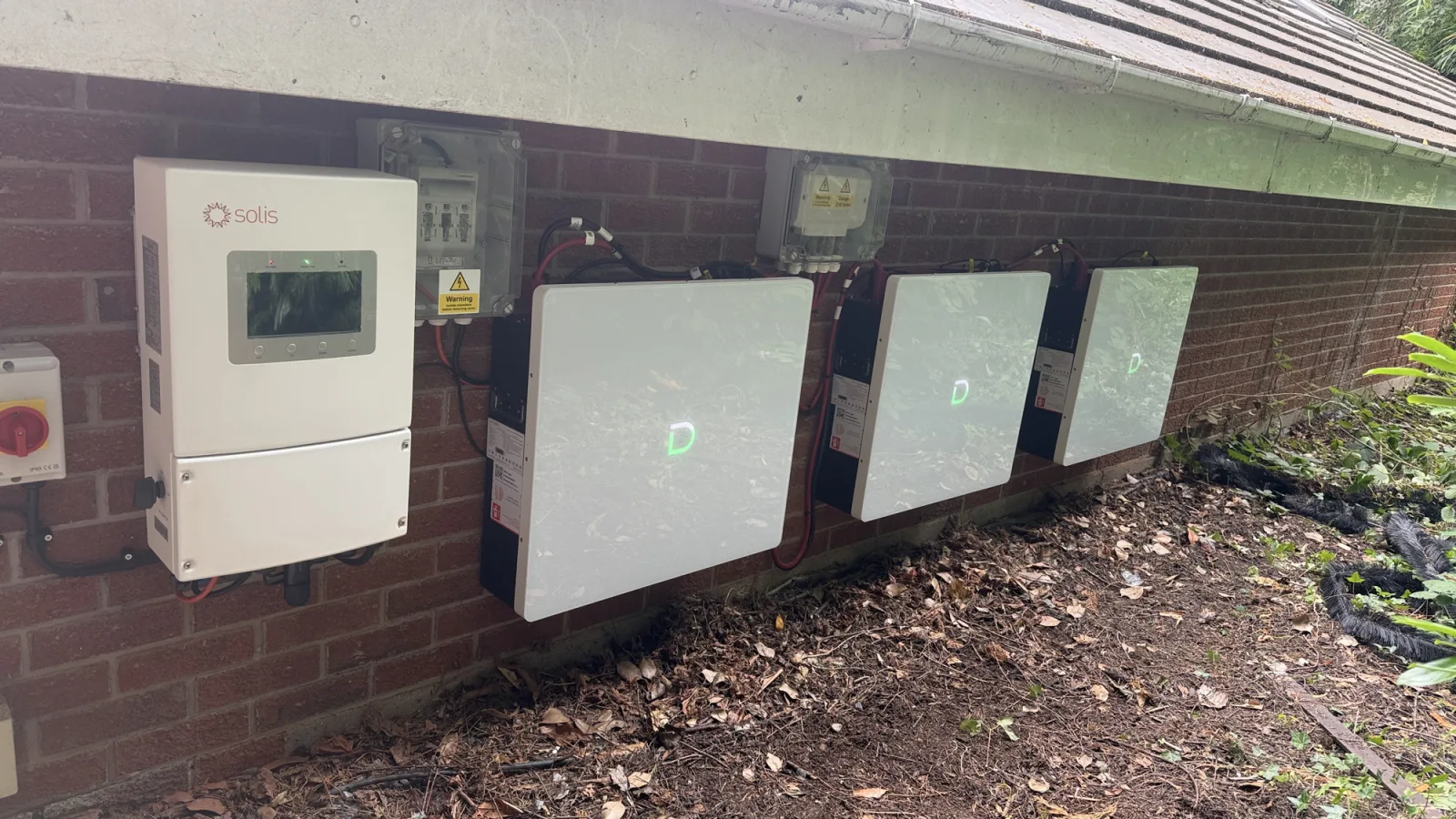
When sunlight hits solar panels, they produce direct current (DC) electricity. Since home appliances use alternating current (AC), a solar inverter steps in to convert the DC into AC, so it’s ready to power your home.
It keeps electricity flowing safely and efficiently, boosting energy output and letting you keep an eye on your system’s performance. Acting as the vital link between your solar setup and your home’s power, it converts DC into AC. Solar inverters also handle other important tasks that help keep your solar system running at peak efficiency such as:
- Monitoring electricity production levels
- Feeding AC electricity to the grid
- Directing DC energy to battery storage
- Monitoring the efficiency of solar panels
- Detecting faults in the system
- Maximising energy output
Main Types of Solar Panel Inverters
There are four main types of solar panel inverters, all great for residential use. Each has its own unique benefits, making it ideal for different kinds of solar setups:
- Hybrid Solar Panel Inverters
- String (or Centralised) Solar Panel Inverters
- Micro Solar Panel Inverters
- AC Coupled Solar Battery Inverters
A solar panel inverter may seem like a small part of your solar system, but they have a huge impact on its performance. For more detailed information on how to choose the right solar inverter for your needs check out our guide: Solar Inverter: Choosing the Right One for Your Home
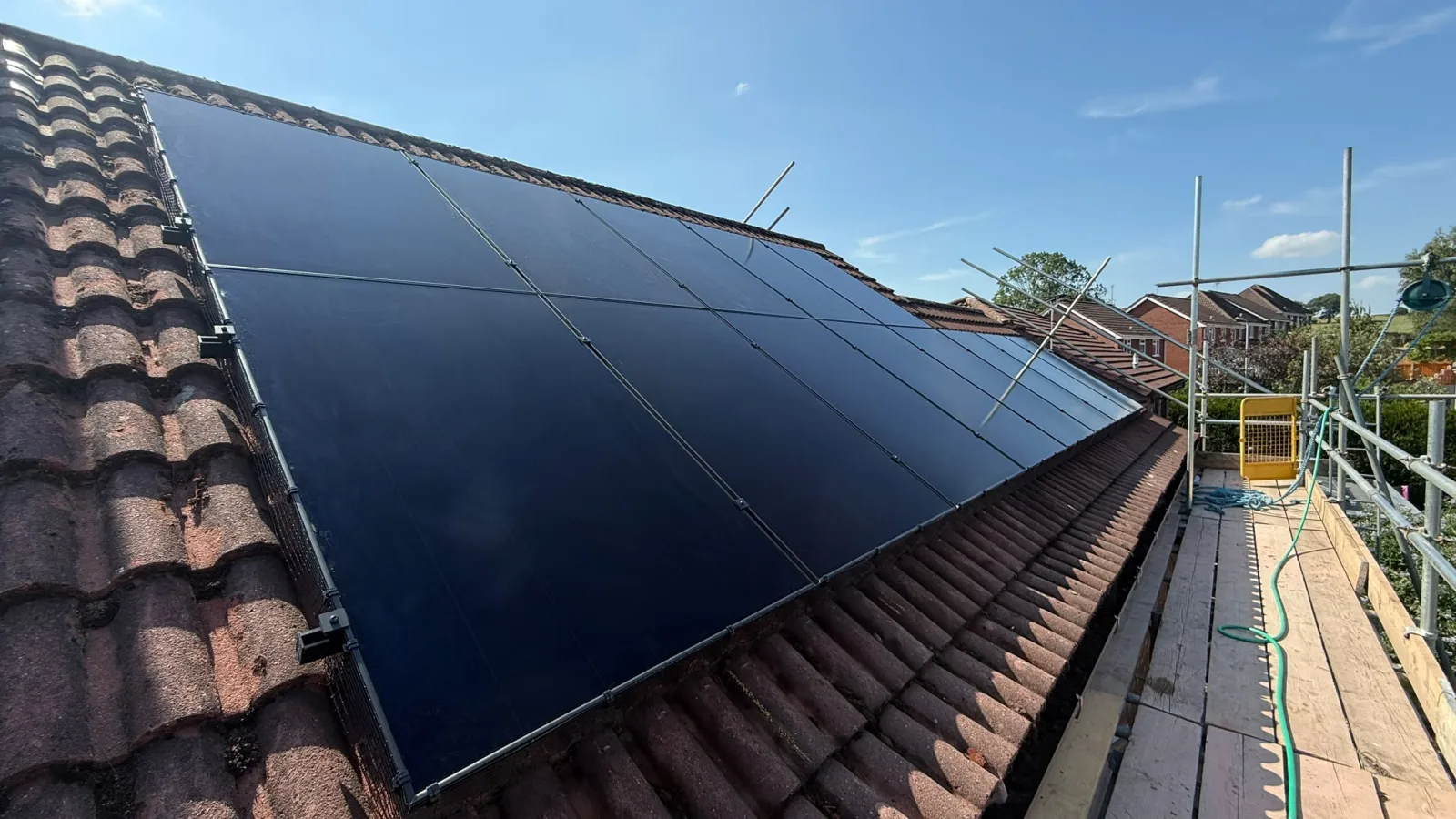
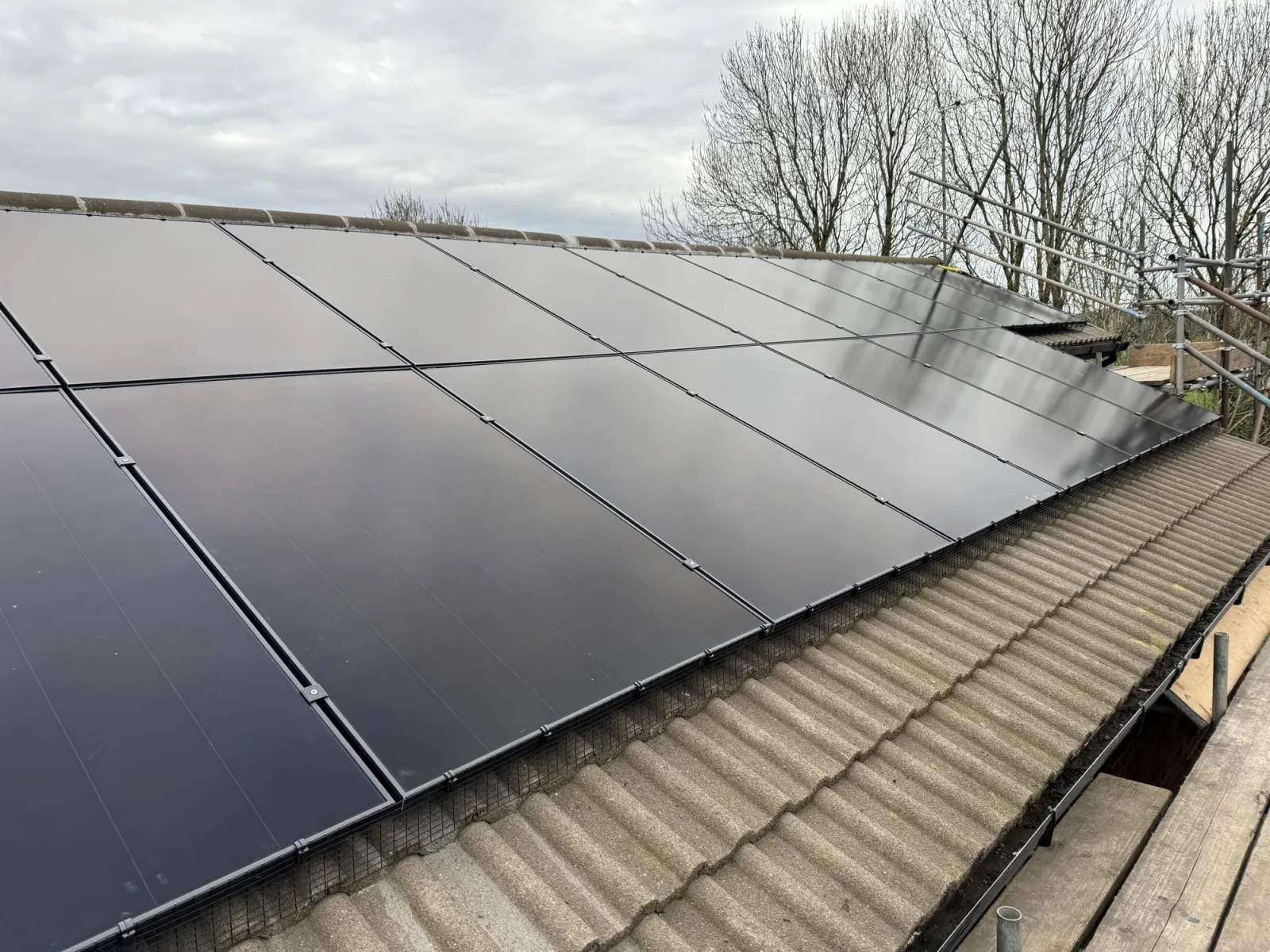
Solar panel installers generally mount your panels on a rail system that is fixed to your roof. An assessment of your roof will be undertaken at the design stage of your Solar PV project. Then the most suitable placement for your panels calculated using specialist software learn more.
Solar Panels Installation
Typically a 6-10 panel system can usually be completed in 1 working day by professionally qualified Solar Panel Installers.
We ensure all solar panels installers are qualified and certified solar panel installation experts. Additionally, solar panels can actually add extra protection to your roof by providing an extra layer of insulation. Thus acting as a barrier against the weather. Solar PV systems are designed to maintain the strength and integrity of your roof, whilst remaining watertight. Furthermore will cause no damage to your roof when fitted by our professional solar panel installers.