

Most Efficient Solar Panels: Top 10 for 2026
The Most Efficient Solar Panels of 2026
As we move through 2026, the demand for renewable energy continues to surge. For homeowners and businesses alike, solar power represents a smart investment in a sustainable future. But not all solar panels are created equal. Efficiency is the name of the game, and choosing the right panel can make a significant difference in your energy production and long-term savings. This guide will explore the most efficient solar panels available this year for homes and businesses alike helping you make an informed decision.
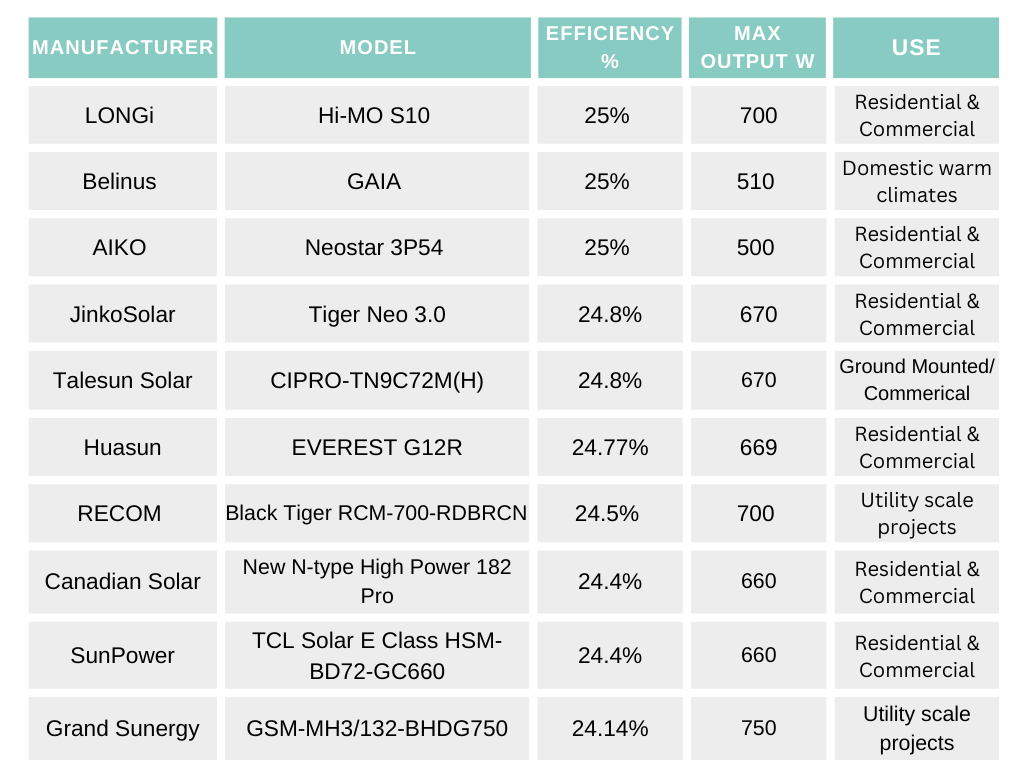
|
MANUFACTURER |
MODEL |
EFFICIENCY (%) |
MAX OUTPUT (W) |
USE |
|---|---|---|---|---|
|
LONGi |
Hi-MO S10 |
25% |
700 |
Residential & Commercial |
|
Belinus |
GAIA |
25% |
510 |
Domestic warm climates |
|
AIKO |
Neostar 3P54 |
25% |
500 |
Residential & Commercial |
|
JinkoSolar |
Tiger Neo 3.0 |
24.8% |
670 |
Residential & Commercial |
|
Talesun Solar |
CIPRO-TN9C72M(H) |
24.8% |
670 |
Ground Mounted/Commercial |
|
Huasun |
EVEREST G12R |
24.77% |
669 |
Residential & Commercial |
|
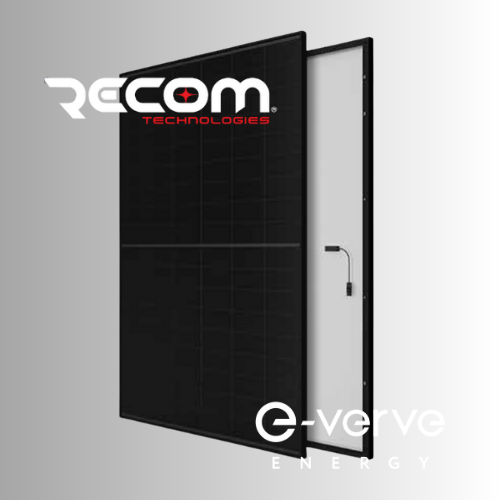
RECOM |
Black Tiger RCM-700-RDBRCN |
24.5% |
700 |
Utility scale projects |
|
Canadian Solar |
New N-type High Power 182 Pro |
24.4% |
660 |
Residential & Commercial |
|
SunPower |
TCL Solar E Class HSM-BD72-GC660 |
24.4% |
660 |
Residential & Commercial |
|
Grand Sunergy |
GSM-MH3/132-BHDG750 |
24.14% |
750 |
Utility scale projects |
What is Solar Panel Efficiency?
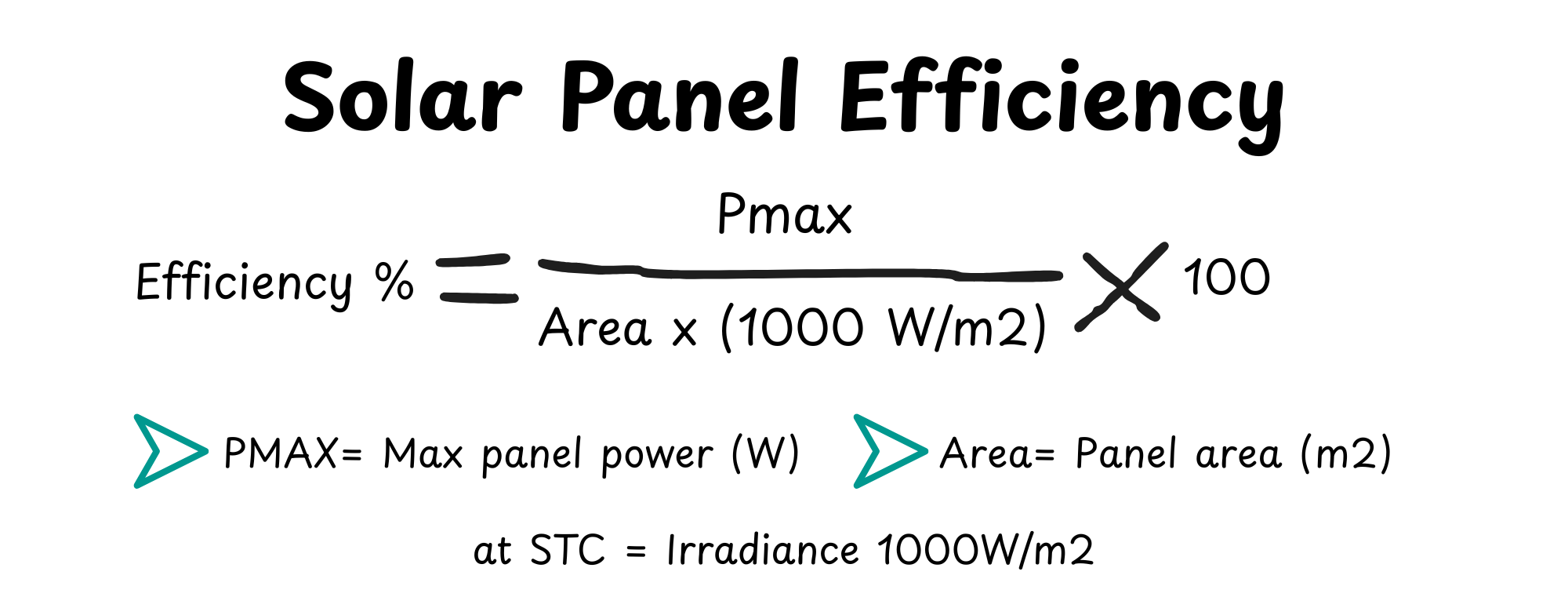
Solar panel efficiency measures the percentage of sunlight hitting a panel that is converted into usable electrical energy. For example, if a solar panel has an efficiency rating of 20%, it means that 20% of the sunlight it absorbs is transformed into electricity. The remaining 80% is reflected or converted into heat.
This calculation is not just a guess. Manufacturers determine efficiency ratings under controlled laboratory settings known as Standard Test Conditions (STC). These conditions include a specific cell temperature (25°C or 77°F), solar irradiance (1,000 watts per square meter), and light spectrum. STC provides a uniform benchmark for comparing the performance of different panels.
Why Solar Panel Efficiency is Important
Choosing from the most efficient solar panels offers several key advantages. Higher efficiency translates directly to more power from a smaller area, which is crucial for properties with limited roof space.
- Faster Payback on Investment: A more efficient system generates more electricity, which accelerates your return on investment by reducing your energy bills more quickly.
- Long-Term Performance (Lifespan): High-efficiency panels often use superior materials and advanced technology, which can lead to better durability and a longer productive lifespan.
- Maximizing Solar Irradiance: Your location’s solar irradiance, or the amount of solar energy available, is a fixed resource. A more efficient panel makes the most of the sunlight you receive, generating maximum power day after day.
What Influences Solar Panel Efficiency?
Several factors impact how well a solar panel performs in the real world, beyond the controlled STC environment.
- Temperature: Solar panels are less efficient at higher temperatures. As a panel heats up in the sun, its voltage drops, reducing overall power output. Look for panels with a good temperature coefficient, which indicates how much efficiency is lost for every degree Celsius rise above 25°C.
- Irradiance Level: The intensity of sunlight directly affects power generation. Efficiency can fluctuate with changing light conditions, such as on cloudy days.
- Cell Type: The type of silicon used in the solar cells is a primary driver of efficiency.
- Cell Interconnection: The way cells are wired together within the panel can also impact performance by minimizing energy loss.
Solar Cell Efficiency: N-Type vs. P-Type
At the core of every solar panel are the solar cells, and their design plays a key role in overall efficiency. These cells are usually made from silicon wafers, which are classified as either P-type or N-type.
For years, P-type silicon, doped with boron, dominated the industry thanks to its lower production costs. But now, N-type silicon, doped with phosphorus, has taken the lead as the better choice. These cells are naturally more efficient, less prone to light-induced degradation, and more tolerant of impurities. That’s why most of today’s top-performing solar panels use N-type cell technology.
Most Efficient Solar Panels: Additional Considerations
While efficiency is a top priority, it isn’t the only factor to consider.
- Affordability: The upfront cost of your solar system is a major consideration. Balance the price of high-efficiency panels with your budget and expected long-term savings.
- Durability: Your panels will be exposed to the elements for decades. Look for strong warranties, robust frame construction, and high ratings for wind and snow loads.
- Power Rating: Measured in watts (W), the power rating indicates a panel’s output under ideal conditions. A higher power rating means more electricity production, but it often corresponds with a larger panel size.
How Manufacturers Test Solar Panel Efficiency
As mentioned, consistency in testing is key. Manufacturers use Standard Test Conditions (STC) to create a level playing field. This ensures that a 450W panel from one brand can be directly compared to a 450W panel from another. The controlled environment allows for the precise measurement of a panel’s maximum power output, which is then used, along with its surface area, to calculate its efficiency rating.
Detailed Review of the Top 10 Most Efficient Solar Panels in 2026
Here’s a look at some of the leading solar panels on the market this year, recognised for their exceptional performance and innovative technology. These are the Top 10 most efficient solar panels 2026 with uses ranging from utility scale solar projects to domestic homes!
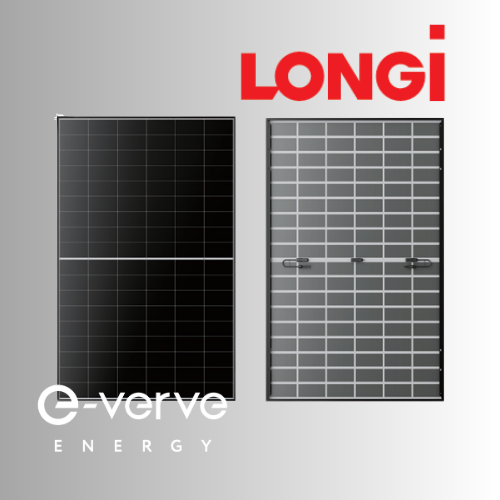
LONGI Hi-MO S10
Specifications: Up to 700W, N-type HJT cell technology.
Performance: Offers a great balance of high power, strong efficiency of 25% and reliability from a leading manufacturer.
Best For: Both residential and commercial applications looking for a premium, high-performance panel from a trusted brand.
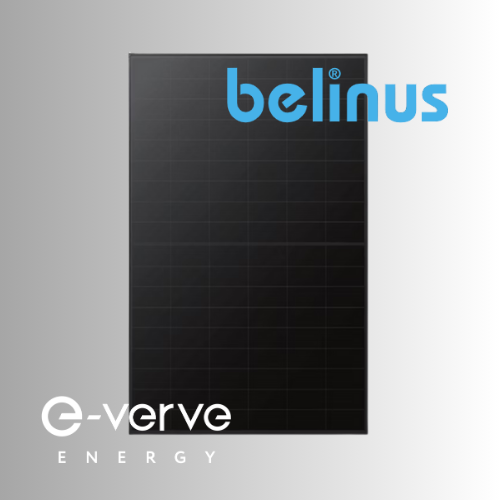
Belinus GAIA
Specifications: Up to 510W, N-type HJT (Heterojunction) cells.
Performance: Boasts an ultra-low temperature coefficient, meaning it performs exceptionally well in hot climates with an efficiency of 25%. It also has a very low degradation rate.
Best For: Homeowners in warm regions who want consistent, high performance throughout the day and over the panel’s lifespan.
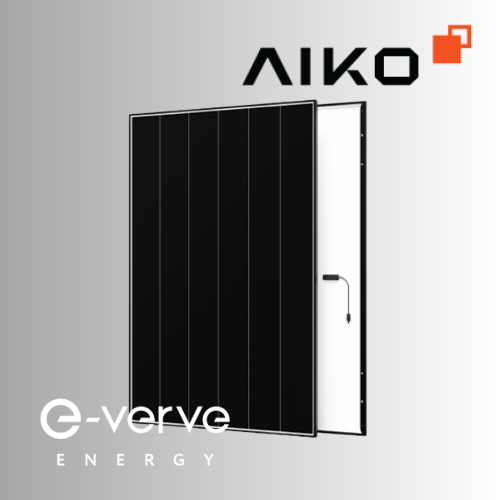
AIKO Neostar 3P54
Specifications: Up to 500W, N-type ABC (All Back Contact) cells.
Performance: A leader in efficiency at 25%. The back contact design eliminates front-side busbars, maximizing light absorption and providing a sleek, all-black look.
Best For: Residential and commercial properties with limited space, where achieving the highest possible output per square meter is the goal
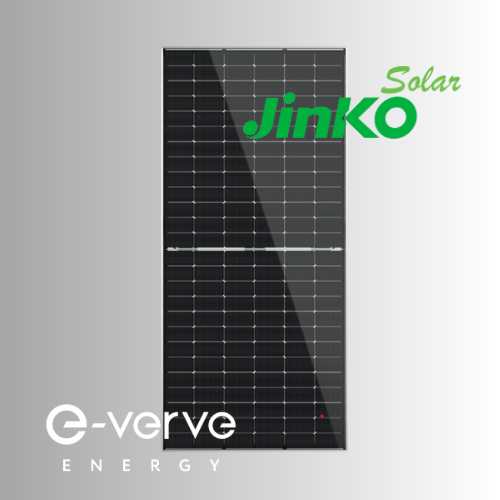
Jinkosolar Tiger Neo 3.0
Specifications: Up to 670W, N-type TOPCon technology.
Performance: A workhorse panel that delivers high efficiency of 24.8% and high power output. Jinkosolar is renowned for its massive production scale and technological innovation.
Best For: Versatile applications, from residential rooftops to large commercial projects, offering excellent value and performance.
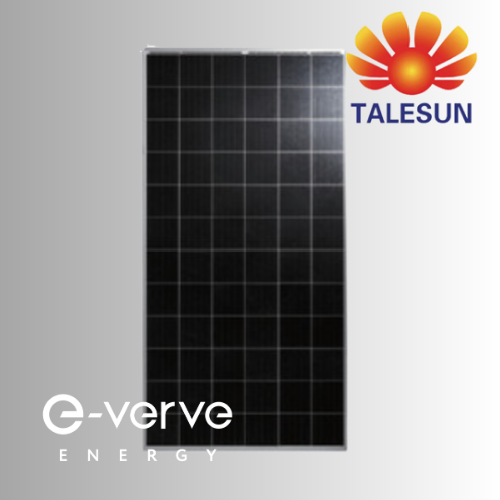
Talesun Solar CIPRO-TN9C72M(H)
Specifications: Up to 670W, N-type TOPCon cells.
Performance: Designed for power with a 24.8% efficiency. This bifacial panel captures light from both sides, increasing energy yield, especially in ground-mounted or flat-roof installations.
Best For: Large ground-mounted systems and commercial flat roofs where reflected light can be captured to boost output.
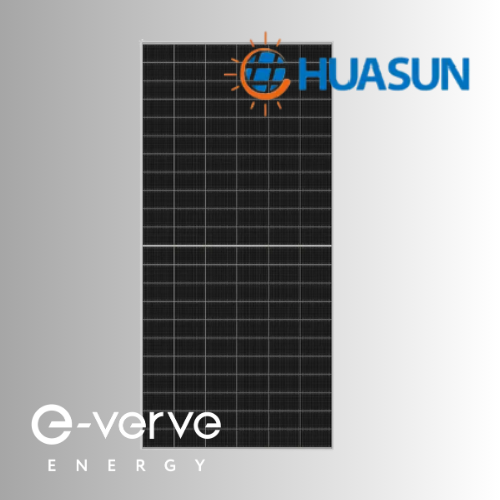
Huasun EVEREST G12R
Specifications: Up to 669W, N-type HJT cell technology.
Performance: Combines high power and efficiency over 24.7% with the benefits of HJT technology. Including superior low-light performance and a low temperature coefficient.
Best For: Projects demanding top-tier power output and efficiency, particularly in climates with variable weather conditions.
RECOM Black Tiger RCM-700-RDBRCN
Specifications: Up to 700W, N-type TOPCon technology.
Performance: High power output makes it suitable for large-scale projects. The Black Tiger series is known for its excellent performance in various light conditions with 24.5% efficiency.
Best For: Utility-scale solar farms and large commercial installations where maximising power density is critical.
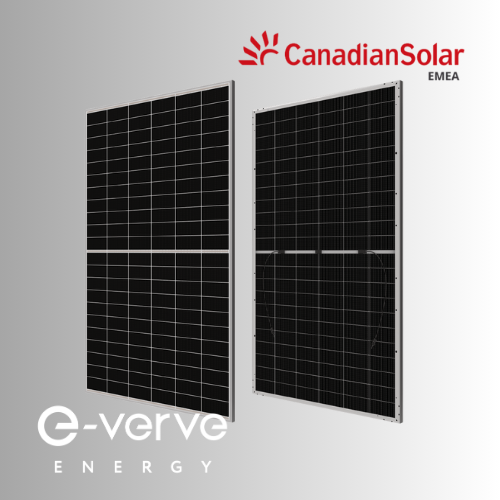
Canadian Solar New N-type High Power 182 Pro
Specifications: Up to 660W, N-type TOPCon technology.
Performance: A reliable and powerful option from one of the world’s largest solar manufacturers. It provides a solid combination of efficiency and value.
Best For: Cost-conscious buyers seeking a high-power, N-type panel for residential or commercial use without paying a premium for the absolute highest efficiency.
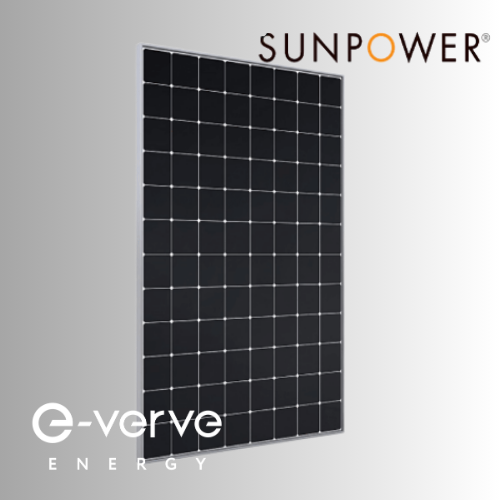
SunPower TCL Solar E Class HSM-BD72-GC660
Specifications: Up to 660W, Shingled Cell Technology.
Performance: SunPower has long been a leader in efficiency. This panel uses a shingled design to eliminate gaps between cells, maximising the active surface area and boosting efficiency and durability.
Best For: Anyone prioritising long-term reliability and high performance, backed by one of the best warranties in the industry.
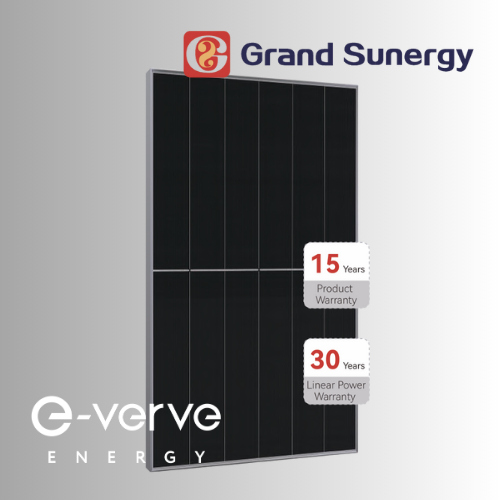
Grand Sunergy GSM-MH3/132-BHDG750
Specifications: Up to 750W, N-type HJT cells.
Performance: Pushing the boundaries of power output, this is one of the most powerful panels available. Its bifacial design further enhances energy generation.
Best For: Utility-scale projects where achieving the lowest Leveliesd Cost of Energy (LCOE) is the primary objective.
So which are the most efficient solar panels for my UK home?
Solar panels for domestic properties need to have both sufficient capacity to maximise energy generation and also be of a reasonable frame size to fit on the roof. As the panel capacity increases, so does the frame size, so this is a key consideration when sizing a solar system.
Solar panels with a capacity between 470W – 490W and frame size of 1134(w) X 1800(h) typically suit most UK domestic properties especially when stacking rows in portrait configuration.
Longi and Aiko offer the most efficient panels for capacities ranging between 470W – 490W, with efficiency levels between 23% – 24% across the ranges both of which are available in all black for an aesthetically pleasing result.
New Innovations: Perovskite Cell Technology
Widely regarded as the next-generation PV cell technology Perovskite solar cells are a promising alternative to traditional silicon solar panels, offering higher efficiency, lower production costs, and greater flexibility in applications.
Perovskite solar cells use a special group of materials called perovskites, known for their unique crystal structure. The name comes from a family of compounds that share the same structure as the mineral calcium titanium oxide (CaTiO3). These materials can be made into semiconductors that are exceptionally good at turning sunlight into electricity.
However Perovskite cell technology is currently still under development with significant barriers preventing their widespread use namely their reduced lifespan due to cell instability and degradation.
Perovskite-On-Silicon Tandem Solar Cells
Oxford PV is a world leader in the development of perovskite-on-silicon tandem solar cells, which have a theoretical maximum efficiency of over 43%, compared to less than 30% for silicon solar cells.
Founded over a decade ago, Oxford PV is a spin-out of Professor Henry Snaith’s University of Oxford laboratory. The research and development site of Oxford PV, and its pilot and production line in Brandenburg an der Havel, Germany enable the accelerated transfer of their technology into industrial-scale perovskite-on-silicon tandem solar cell manufacturing.
The main advantage of using perovskites over silicon in tandem is that they can convert more of the light spectrum into energy due to the high mobility of electrons inside the cells.
“Our record-breaking solar panels demonstrate that we are on the cusp of the next solar revolution, which will be delivered, in part, by our tandem cell technology.”
Chris Case, Chief Technology Officer, Oxford PV
In 2024 Oxford PV broke a world record by producing the world’s most-efficient residential-size solar module, achieving a 26.9% conversion efficiency. Furthermore, researchers at the organisation are striving to continually develop the cells’ efficiency by one percentage point a year!
“This new world record is a crucial milestone for Oxford PV, proving that our tandem solar cells can deliver record-breaking performance when assembled into solar panels.”
David Ward, Chief Executive Officer, Oxford PV
Most Efficient Solar Panels: Final Thoughts
The solar industry is advancing at an incredible pace, with N-type cells currently dominating the high-performance market. The most efficient solar panels of 2026 offer remarkable power ratings and efficiency levels that were unimaginable just a few years ago.
When choosing a solar panel, it’s essential to consider efficiency, durability, and the power rating. A higher-efficiency panel can deliver superior energy production, a faster return on investment, and better performance over its 25+ year lifespan, especially if you have limited space.
How E-Verve Energy Ltd Can Help
Navigating the world of solar technology can be overwhelming. At E-Verve Energy Ltd, our experts are here to help. We can assess your property, understand your energy needs, and design a custom solar system using the best panels for your specific situation and budget. We handle everything from consultation and design to professional installation and aftercare, ensuring you get a reliable, high-performing system that will serve you for decades. Contact us today to start your journey toward energy independence.
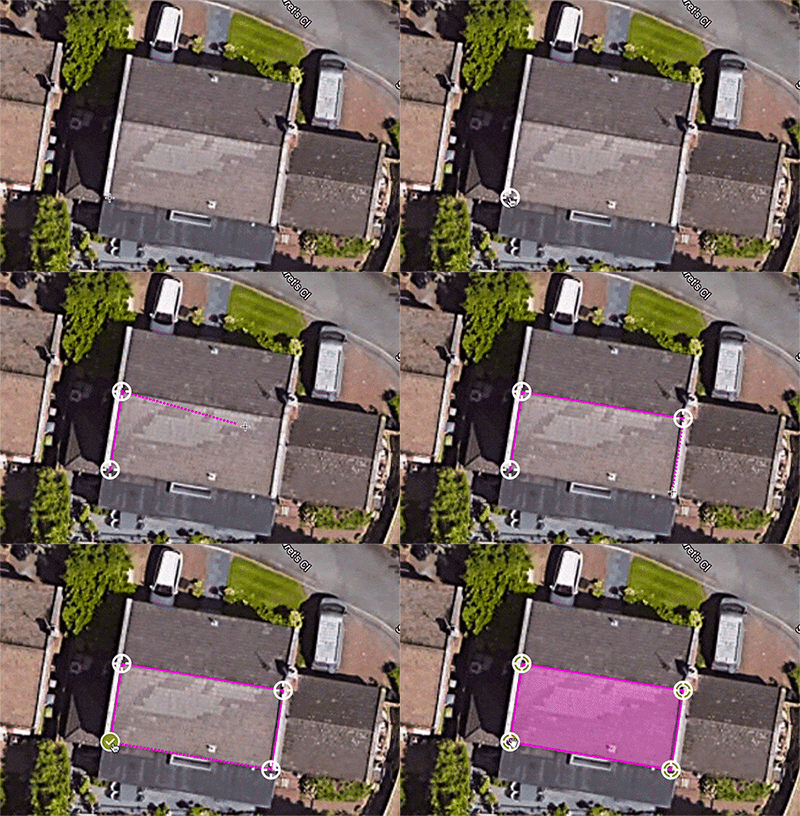
Get Your Custom Solar Quote Today
Select your ideal setup and receive a tailored quote in minutes.
130+ Google Reviews
Have more questions?
That’s okay, we’ve answered some of the more commonly asked questions here but if you still have questions, just get in touch and we’ll be happy to provide any support you need.