
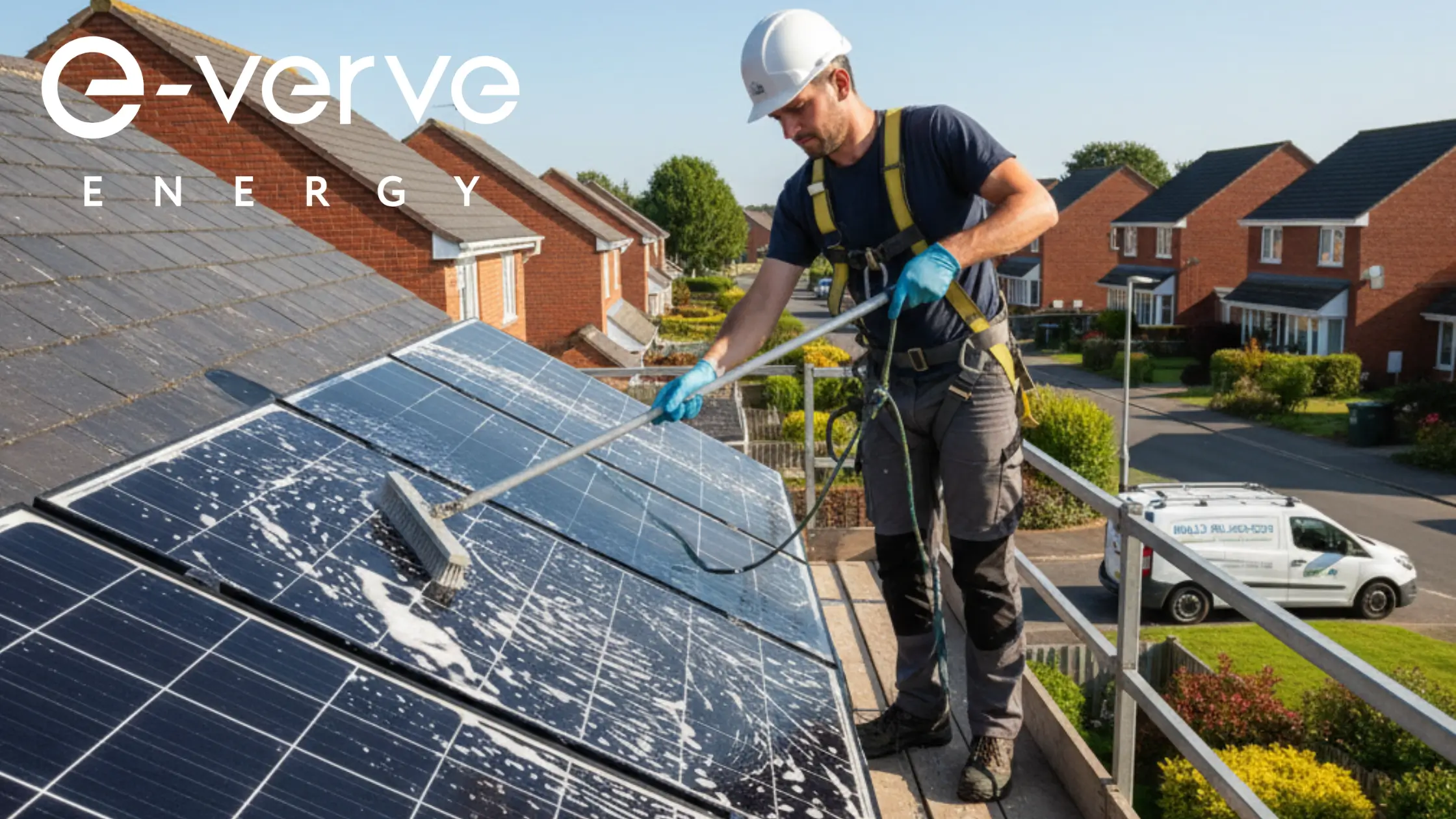
e-verve energy conducting solar panel cleaning on roof mounted solar panels

Solar Panel Cleaning & Maintenance

Solar Panel Cleaning & Maintenance: Our UK Guide

Originally, experts claimed that solar panel cleaning was mainly unnecessary. However, we now understand that weather and air pollution significantly affect them. To maximise solar power efficiency and maintain the highest electricity yield, regular cleaning with appropriate equipment is essential.

To get the most out of your system, you need to keep it running at peak performance. A key part of this is regular solar panel cleaning. Dust, bird droppings, pollen, and general grime can build up over time, reducing the amount of sunlight your panels can absorb. This guide will walk you through everything you need to know about effective solar panel cleaning to maximise your energy generation and protect your investment.

Types of Solar Panels and Considerations

The location of your solar panels greatly affects how you approach cleaning them. Each setup presents unique challenges and accessibility issues. Understanding these differences is the first step in creating a safe and effective solar panel cleaning routine.

Roof-Mounted Solar Panel Cleaning

This is the most common installation for UK homes. While great for catching maximum sunlight, their position makes cleaning more difficult and potentially dangerous. Accessing a roof requires safety precautions, and working at height can sometimes be best left to professionals unless you have the right safety equipment and experience. However if you can reach your panels easily or from ground level our 7 step guide to cleaning below may be suitable for you.

Wall-Mounted Solar Panel Cleaning

Less common but still found on some properties, wall-mounted panels are often at a lower height than roof installations. Also as wall-mounted solar panels are vertical, they don’t accumulate debris like leaves or snow the way roof panels do. This generally means they need less frequent attention and they might be accessible with a sturdy ladder or extendable cleaning tools. Because they are vertical, they naturally shed a lot of debris, but a little human intervention ensures they operate at their absolute best. For more detailed information check out our blog: Wall Mounted Solar Panels: Are they right for you?

Ground-Mounted Solar Panel Cleaning

Ground-mounted arrays are much easier and safer to access. This makes DIY solar panel cleaning a more viable option. You can typically clean these panels from the ground using standard equipment without the risks associated with heights. However, they can be more prone to collecting dirt, dust from nearby fields, and debris kicked up from the ground. Another issue to consider when cleaning solar panels that are ground mounted is vegetation management. Since your array is sitting on the ground, nature will try to grow around and under it.

  • Solutions: Many homeowners choose to lay down a weed barrier fabric covered with gravel or crushed stone underneath the array during installation. This drastically reduces the need for mowing and trimming. Alternatively, planting low-growing, shade-tolerant ground cover (like clover) can suppress weeds without blocking the sun.
  • Shade Prevention: Tall grass, weeds, or growing shrubs can quickly cast shadows on the lower edge of your panels. Even partial shading on the bottom row of cells can significantly drop the output of the entire string. You must keep the area directly in front of the array mowed and trimmed.
  • Under-Panel Growth: Vegetation growing underneath the racking can trap moisture and attract pests. It can also interfere with airflow, which is necessary for cooling the panels.

For more detailed information check out our blog: Ground Mounted Solar Panels: The Complete Guide & Benefits
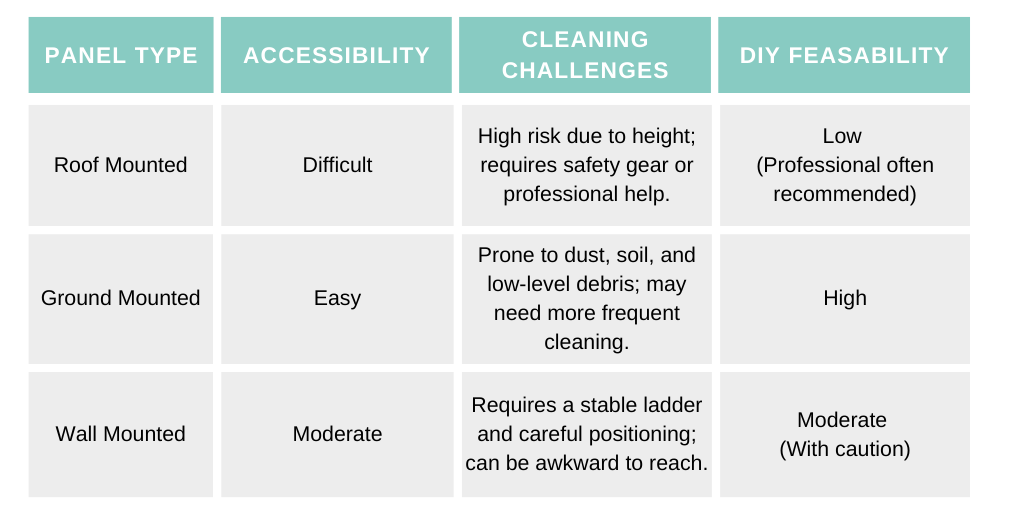
solar panel cleaning chart includes measures for roof mounted, wall mounted and ground mounted solar panels #solarpanelcleaning

How Often Should I Clean My Solar Panels?

There isn’t a single answer to this question, as the ideal cleaning frequency depends on your specific environment. While many UK homeowners find an annual clean is sufficient, certain factors may require more frequent attention.

  • Geographical Location: If you live in a coastal area, salt deposits can build up and create a hazy film on your panels, significantly impacting their efficiency. Similarly, homes in urban or industrial areas may see more pollution and soot accumulate.
  • Site Nature: Properties in rural or agricultural settings face different challenges. Dust from ploughed fields, pollen during spring and summer, and debris from trees can quickly cover panels. If your home is near a busy road, traffic-related grime can also be a problem.
  • Weather Patterns: Most UK regions get enough rain to wash away light dust. However, long dry spells can allow dirt to bake onto the panel surface, requiring a manual clean.
  • Bird Activity: Areas with a high bird population often mean more frequent and stubborn droppings, which can block sunlight and even damage the panel surface if left for too long.

As a general rule, inspect your panels visually a few times a year. If you notice a visible layer of dirt or see a drop in your system’s energy output, it’s likely time for a solar panel cleaning session.

Equipment for Solar Panel Cleaning

Using the right tools is crucial for cleaning your panels safely and effectively without causing damage. The equipment you need depends on whether your array is easy to reach. Secondly its important to watch for wires when undertaking solar panel cleaning and be mindful of the cabling running from the panels to the inverter. Do not pull, snag, or spray water directly into electrical boxes or connections to avoid damage. Another thing to avoid is pressure washers. The high pressure can force water into the seals of the panel or damage the electrical connections. A gentle garden hose is all you need.

For Easily Accessible Solar Arrays

If you can safely reach your panels from the ground or a stable platform, a DIY solar panel cleaning kit is a great option.

  • Long-Handled Brush with Soft Bristles: A non-abrasive brush on a telescopic pole allows you to gently scrub the panel surface without scratching the glass.
  • Biodegradable Soap: Use a soap specifically designed for solar panel cleaning or a gentle, biodegradable car washing soap. Avoid harsh chemicals and detergents. Crucially, do not use washing-up liquid, as it can leave behind a residue that attracts more dirt.
  • Soft Solar Panel Wiper or Squeegee: After rinsing, a high-quality, soft squeegee will remove excess water and prevent mineral deposits and streaks from forming as the panel dries.
  • Hose with a Spray Nozzle: A standard garden hose is perfect for rinsing the panels. Never use a high-pressure washer, as the intense jet can damage the seals, force water into the panel, and even crack the glass.

For Hard-to-Reach Solar Arrays

When panels are on a high or steeply pitched roof, safety must be your top priority. In these cases, professional solar panel cleaning may be the best course of action. If your panels are mounted on a second story or higher, do not attempt to reach them with a ladder. The risk of a fall outweighs the cost of a cleaning service.

  • Professional Solar Panel Cleaning Services: These companies have the training, insurance, and specialised equipment to do the job safely. They often use purified water systems that leave a streak-free finish without any detergents.
  • Specialised Equipment: Professionals use safety harnesses, secure ladders or scaffolding, and advanced water-fed poles that allow them to clean panels efficiently from a safe position.
  • Specialised Systems: Professionals often us purified water systems (which leave zero residue) to handle high-up installations safely.

Additionally, if you notice any damage—like cracked glass, loose wires, or signs of burning—do not touch the system. Contact your installer or a certified technician immediately.

Step-by-Step Guide to Cleaning Solar Panels

If you’ve determined it’s safe to clean your panels yourself, follow these steps for a perfect, streak-free finish.

  1. Safety First: Before you start, consult your solar panel manufacturer’s manual for any specific cleaning guidelines. If your system is grid-tied, it’s a good practice to shut it down at the isolator switch as a precaution.
  2. Choose the Right Time: Plan your cleaning for an overcast day, or early in the morning or late in the evening. Cleaning in direct, hot sunlight will cause the water to evaporate too quickly, leaving behind streaks and residue.
  3. Initial Rinse: Use your garden hose to give the panels a gentle rinse. This will wash away any loose dirt and debris.
  4. Scrub Gently: Mix your biodegradable soap with water in a bucket. Dip your soft-bristled brush in the soapy water and gently scrub the surface of the panels. Work in sections, from top to bottom.
  5. Rinse Thoroughly: Immediately rinse off the soap with your hose. Don’t let the soap dry on the panels, as this can leave a film.
  6. Squeegee Dry: Use your soft squeegee to remove all the water from the panel surface. Again, work from top to bottom, wiping the blade after each pass to ensure a clean finish.
  7. Final Inspection: Once dry, give the panels a final look to ensure no spots or streaks remain. Once you’re satisfied, you can safely restart your system if you turned it off.

When to Clean Solar Panels

Timing your solar panel cleaning session correctly is just as important as the technique itself.

  • Time of Day: As mentioned, avoid the midday sun. The heat can cause “thermal shock” if you spray cold water onto a hot panel, potentially cracking the glass. Early morning is ideal because the panels are cool and any dew can help soften the dirt.
  • Weather Conditions: Choose a calm, overcast day. Avoid cleaning in windy conditions, as dust and debris can blow back onto the wet panels. It’s also pointless to clean during or just before rain, as the rainwater will interfere with your efforts and may leave its own mineral deposits.

By following these guidelines for proper solar panel cleaning, you can ensure your system remains efficient, productive, and continues to provide you with clean, renewable energy for years to come. If you would like to explore how much solar panels could save on your energy bills get in touch with team E-Verve for a free no obligation quote and expert advice.

Every installation is carried out by our certified professionals who strictly adhere to the Microgeneration Certification Scheme (MCS) and all relevant UK regulations. This not only gives you peace of mind but also secures your eligibility for government incentives like the Smart Export Guarantee (SEG).

From the first consultation through installation and aftercare, E-Verve Energy delivers expert advice, high-quality workmanship, and ongoing support—helping you make the most of your investment!

Have more questions?

That’s okay, we’ve answered some of the more commonly asked questions here but if you still have questions, just get in touch and we’ll be happy to provide any support you need.

The short answer is No. We strongly recommend avoiding washing up liquid for cleaning your solar panels.

Detailed Explanation:

While it might seem like a convenient and cheap option, using standard household washing up liquid can actually reduce the efficiency of your solar panels over time. Here is why you should avoid using it when cleaning solar panels:

  • Residue Buildup: Washing up liquids often contain harsh chemicals and surfactants designed to cut through grease on dishes. On solar panels, these chemicals can leave behind a soapy film or residue that is difficult to rinse off completely.
  • Dirt Attraction: Ironically, the sticky film left behind by washing up liquid can attract more dirt and dust than before, meaning your panels will get dirty again much faster.
  • Potential Damage: Some detergents contain abrasive ingredients that could degrade the anti-reflective coating on the glass surface of your panels.
Better Alternatives:

To keep your panels sparkling and efficient without the risk, stick to these safer methods when cleaning solar panels:

  1. Water Only: For light dust, plain water is often enough. Ideally, use deionized or distilled water to prevent calcium deposits (hard water spots) from forming as the panels dry.
  2. Solar-Specific Soap: If you need to remove stubborn grime or bird droppings, use a dedicated solar panel cleaning solution. These are biodegradable and formulated to rinse away cleanly without leaving streaks.
  3. Automotive Soap: In a pinch, a high-quality, biodegradable car wash soap is a safer alternative to dish soap, as it is designed to be gentle on coated surfaces and glass.

The short answer is No. You should never use a power washer when cleaning solar panels.

Detailed Explanation:

Using a power washer, also known as a pressure washer, on your solar panels is extremely risky and can cause irreversible damage. While the high-pressure spray might seem like a quick way to blast away dirt, it poses a significant threat to the integrity and performance of your solar energy system for several reasons:

  • Seal Damage: Solar panels are manufactured with weatherproof seals around the edges to protect the internal photovoltaic cells from moisture and environmental elements. The intense pressure from a power washer can easily compromise or break these seals, allowing water to penetrate the panel. This can lead to short-circuiting, corrosion, and complete system failure.
  • Microcracks: The force of the water jet can cause tiny, often invisible cracks (microcracks) in the solar cells or the protective glass. While you may not see this damage immediately, it can degrade the panel’s performance over time and create weak points that can worsen with weather changes.
  • Voiding Your Warranty: Most solar panel manufacturers explicitly state that damage caused by improper cleaning methods, including the use of power washers, is not covered under their warranty. Using one could mean you are financially responsible for any repairs or replacements.
  • Surface Abrasion: The high-pressure stream can be abrasive, potentially scratching or damaging the anti-reflective coating on the glass. This coating is vital for maximizing sunlight absorption, and any damage to it will reduce your panels’ efficiency.
Safer Alternatives:

To clean your solar panels effectively without risking damage, always opt for gentler methods:

  1. Gentle Rinse: A standard garden hose with a spray nozzle is perfect for rinsing away loose dust and debris. The pressure is low enough to be safe for your panels.
  2. Soft Brush and Soap: For more stubborn grime, use a soft-bristled brush on a long, telescopic pole. Combine this with a bucket of water and a small amount of a dedicated solar panel cleaning solution or a gentle, biodegradable car wash soap.
  3. Professional Cleaning: If your panels are hard to reach or you’re not comfortable cleaning them yourself, hiring a professional solar panel cleaning service is the safest and most effective option. They have the right equipment and expertise to do the job without causing damage.

The short answer is No. You generally don’t need a full water softener system, but using purified or deionized water is highly recommended to prevent spotting when cleaning solar panels.

Detailed Explanation:

While you don’t necessarily need a permanent water softener installed in your home to clean your panels, the quality of the water you use matters significantly.

If you live in an area with “hard” water (water high in mineral content like calcium and magnesium), simply spraying your panels with a garden hose can actually leave them looking dirtier than before. Here is why:

  • Hard Water Spots: When hard water dries on a surface, the water evaporates but leaves the minerals behind. These manifest as white, chalky spots or streaks—similar to what you might see on a shower screen or car windows.
  • Reduced Efficiency: These mineral deposits can create a layer of shade over the photovoltaic cells, blocking sunlight and reducing the efficiency of your panels. Over time, these deposits can bake onto the glass in the sun, making them extremely difficult to remove.
When is Treatment Necessary?
  • Hard Water Areas: If your tap water is hard, you should avoid using it directly on the panels unless you plan to squeegee them immediately and thoroughly.
  • Leaving to Air Dry: If you plan to rinse the panels and let them air dry, you must use water that has been filtered or treated to remove minerals.
Better Alternatives to a Home Water Softener:

Instead of installing a home water softener just for cleaning, professionals and DIY enthusiasts often use these specific solutions when cleaning solar panels:

  1. Deionized (DI) Water: This is the gold standard for solar cleaning. Deionized water has had all mineral ions removed. It acts like a “mineral magnet,” pulling dirt off the panel and drying completely spot-free without the need for squeegeeing. You can buy portable DI vessels or resin filters that attach to your hose.
  2. Rainwater: Surprisingly, rainwater is naturally soft and free of the heavy minerals found in groundwater. If you have a clean rain barrel, this is a great, eco-friendly option for washing your panels.
  3. Distilled Water: For small arrays or spot cleaning, buying a few jugs of distilled water is a cost-effective way to get a final, spot-free rinse.
Summary:

If you use tap water, you must dry the panels manually with a squeegee to prevent spots. If you want to spray and walk away, you need to use deionized or purified water.

The short answer is Yes. You should dry your solar panels after washing them, unless you are using purified or deionized water for the final rinse.

Detailed Explanation:

Whether you need to manually dry your solar panels depends entirely on the type of water you use for cleaning. Drying prevents mineral deposits that can reduce your system’s efficiency.

Why Drying is Important (When Using Tap Water):
  • Prevents Hard Water Spots: Most tap water contains minerals like calcium and magnesium. When this “hard water” evaporates, it leaves these minerals behind on the glass surface. This creates chalky white spots or a hazy film.
  • Maintains Efficiency: These mineral deposits act like a thin layer of shade, blocking some of the sunlight from reaching the photovoltaic cells beneath the glass. A panel covered in water spots will not operate at its peak efficiency.
  • Avoids Baked-On Residue: If left to dry in the sun, these mineral spots can bake onto the panel’s surface, making them much harder to remove during the next cleaning.
When is Drying NOT Necessary?

You do not need to dry your panels if you use purified water for the final rinse. This includes:

  • Deionized (DI) Water: This is water that has had all of its mineral ions removed. Because it is free of solids, it evaporates completely without leaving any residue or spots. This is the method most professional solar panel cleaners use.
  • Distilled Water or Rainwater: These water sources are also naturally soft and free from the minerals that cause spotting.
Best Methods for Drying Solar Panels:

If you are using regular tap water, you must dry the panels immediately after the final rinse to get a streak-free finish.

  1. Use a High-Quality Squeegee: The most effective tool is a soft, professional-grade window cleaning squeegee.
    • Work from top to bottom in slightly overlapping strokes.
    • Wipe the squeegee blade with a clean, lint-free cloth after each pass to prevent dragging dirt back across the clean panel.
  2. Lint-Free Microfiber Cloth: For smaller, easily accessible arrays, a soft, absorbent microfiber cloth can be used to dry the surface. However, this can be time-consuming for larger systems.
Summary

If you wash with tap water, drying is a crucial final step. To save yourself the effort, consider investing in a small deionizing filter for your hose, which will give you a perfect, spot-free rinse every time without any need for manual drying.